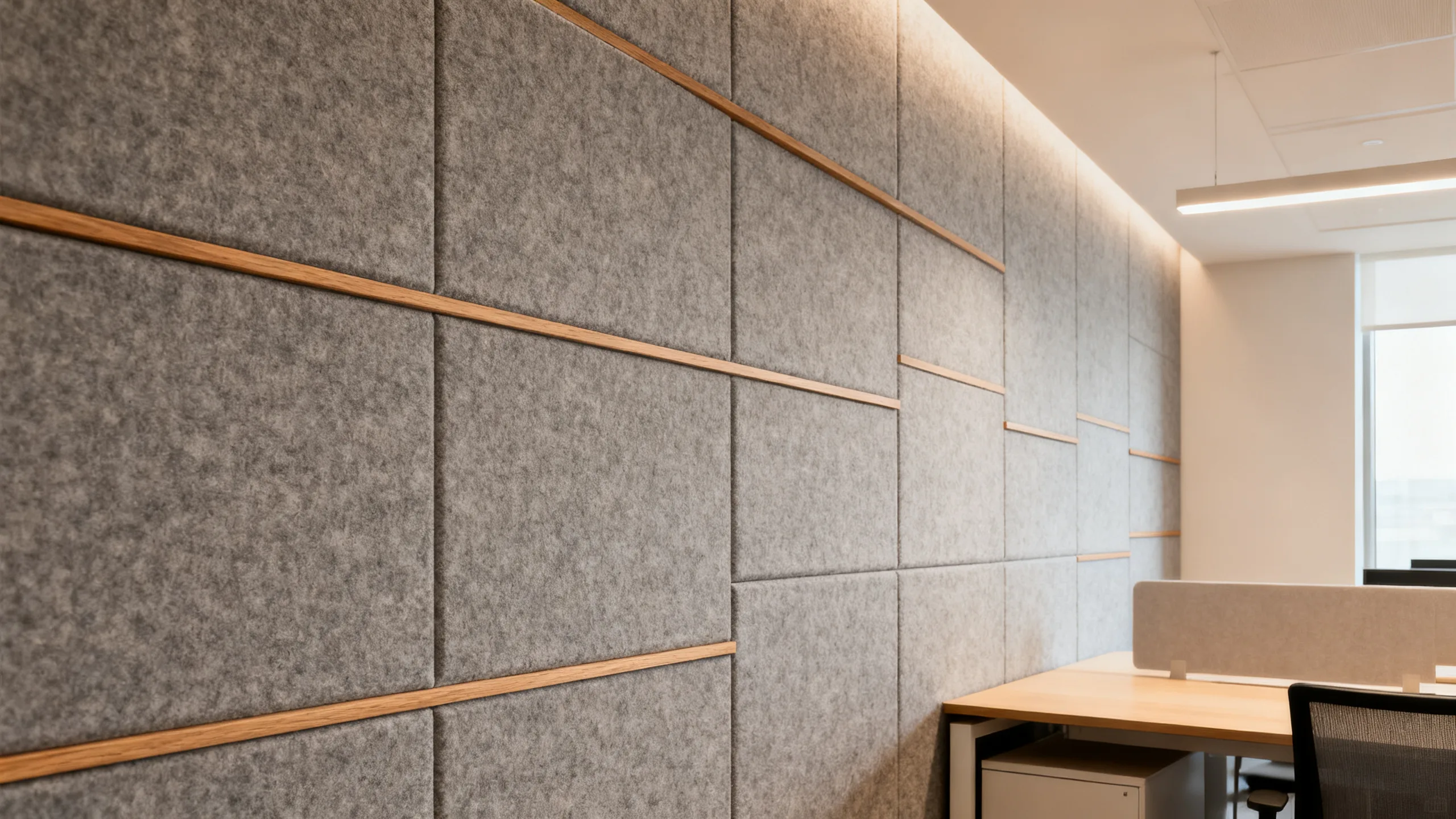
PET Wall
Panels
Compare PET felt wall panel specifications, colour references and acoustic documentation. Understand how felt differs from decorative PET film on cabinet doors.
Design reference imagery. Final materials, dimensions and details are defined in the project specification.
PET felt and PET decorative film are different products.
PET identifies a polymer. Compressed PET felt used in acoustic panels has a fibrous form; a decorative PET film applied to a cabinet board is a different surface product. Select each by its own specification.
For a third-party example of compressed polyester felt, see Autex Cube product information. Its stated properties apply to that named product and must not be transferred to an unspecified panel.
Request the proposed panel build-up.
Record the felt product, thickness, density where provided, facing, backing and colour sample. If wood slats are proposed, identify their dimensions and spacing separately.
Request product-specific evidence for recycled content, emissions and acoustic claims. The PET name alone does not establish any percentage, certification or rating.
Match the panel to the room conditions.
Describe the room purpose, wall elevations and acoustic objective. Ask for test information matching the proposed panel and mounting arrangement.
For humid, wet or high-touch locations, obtain the named product's intended-use and care information. Do not assume water, mildew, scratch or fingerprint resistance from the material name.
Explore Wall Panel Collections
Coordinate PET felt with our wider wall panel program — wood, acoustic, and decorative systems engineered for architectural integration.
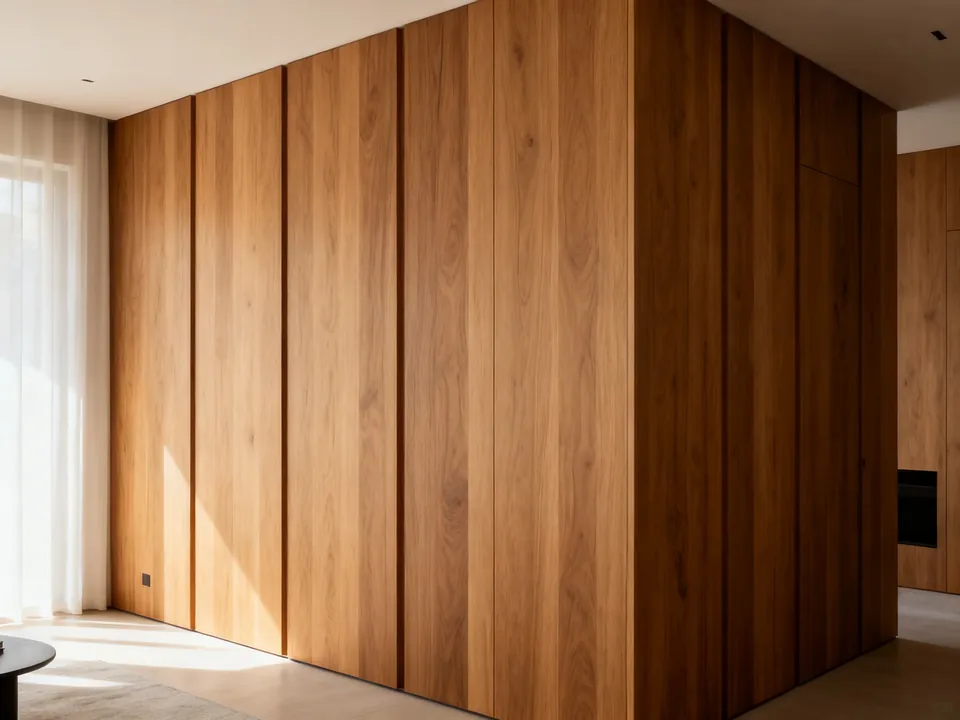
Wood Wall Panels
Real-veneer oak and walnut slat cladding — finish-matched to wardrobes and interior doors for warm, coordinated rooms.
Explore wood panels →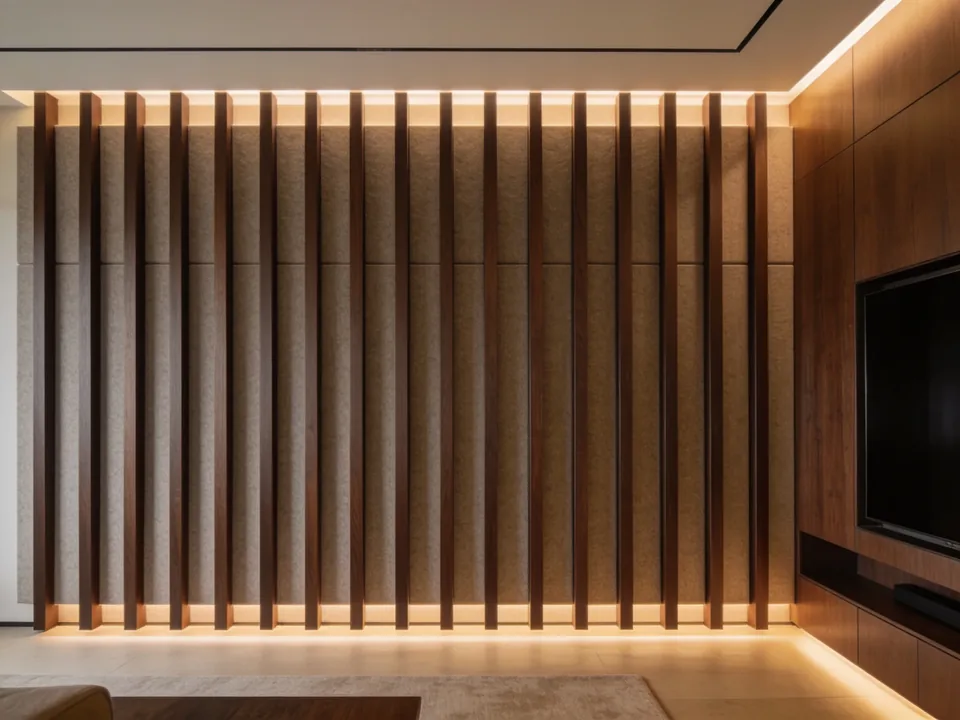
Acoustic Wall Panels
Sound-managing panel systems for offices, studios, and hospitality — engineered to calm reflective interiors.
Explore acoustic panels →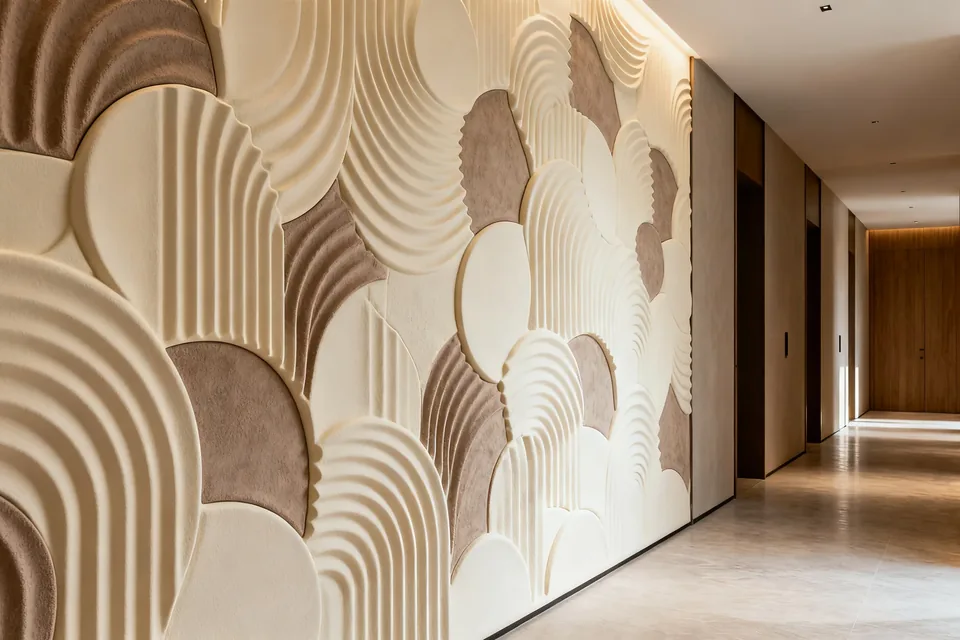
Decorative Wall Panels
Textured and patterned feature panels — statement surfaces for lobbies, retail, and signature residential walls.
Explore decorative panels →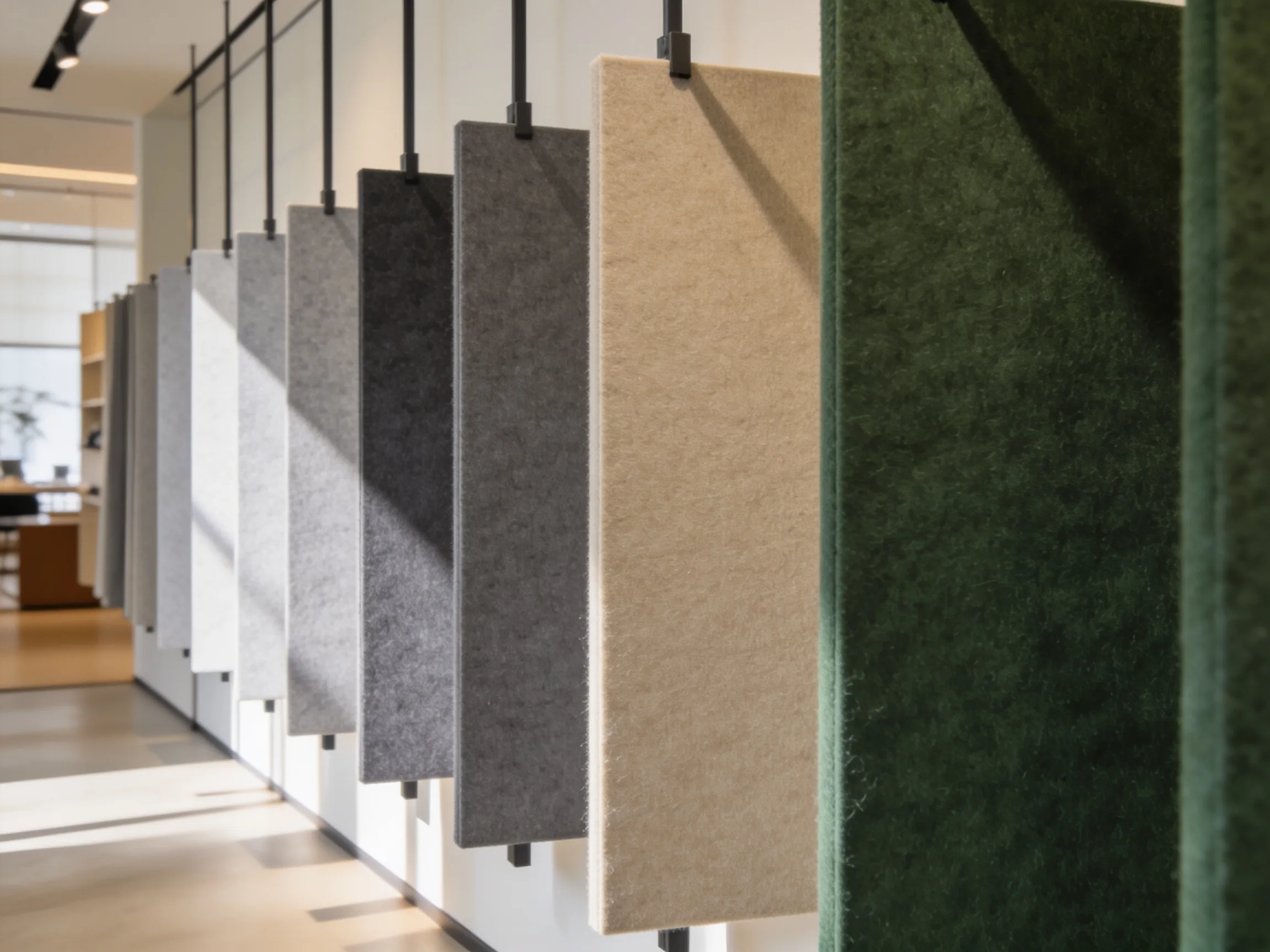
Confirm the build and supply scope.
For pet wall panels, provide felt or decorative-film product type, panel thickness, facing, colour sample and intended room conditions. Keep confirmed selections separate from items that need a proposal.
Plan drawing and sample reviews · Request product-specific documents
Prepare your project brief.
Group repeated rooms and quantities under one drawing revision. Record the requested delivery phases, packaging references and who supplies adjoining components.
Separate the panel core from the finish · Download planning worksheets
Frequently Asked Questions
What does PET mean in wall panels?
PET means polyethylene terephthalate. A PET felt panel uses a fibrous felt form; a PET decorative film on a cabinet board is a different product form with different purposes and properties.
Is PET felt automatically waterproof or mildew resistant?
Do not infer those properties from the polymer name. Obtain intended-use, care and environmental suitability information for the named product before choosing it for a humid or wet location.
How should acoustic performance be checked?
Request the named panel's test data with its thickness, facing and mounting configuration. The room result depends on the overall design; a generic PET label is not a performance rating.
How are PET panels installed?
Use the selected manufacturer's installation information and have the project team confirm the substrate and fixing arrangement. Product descriptions and reference pictures are not installation instructions.
Can PET felt match PET cabinet doors?
Colour coordination can be reviewed with samples, but felt and decorative film are not interchangeable surfaces. Confirm each product separately, including its finish, care requirements and supporting documents.
Define Your PET Panel Specification
Share felt or decorative-film product type, panel thickness, facing, colour sample and intended room conditions. Request a proposal that identifies the included components, assumptions and next review steps.
Prepare a more complete enquiry.
Separate the panel core from the finish · Download planning worksheets · Discuss your project